
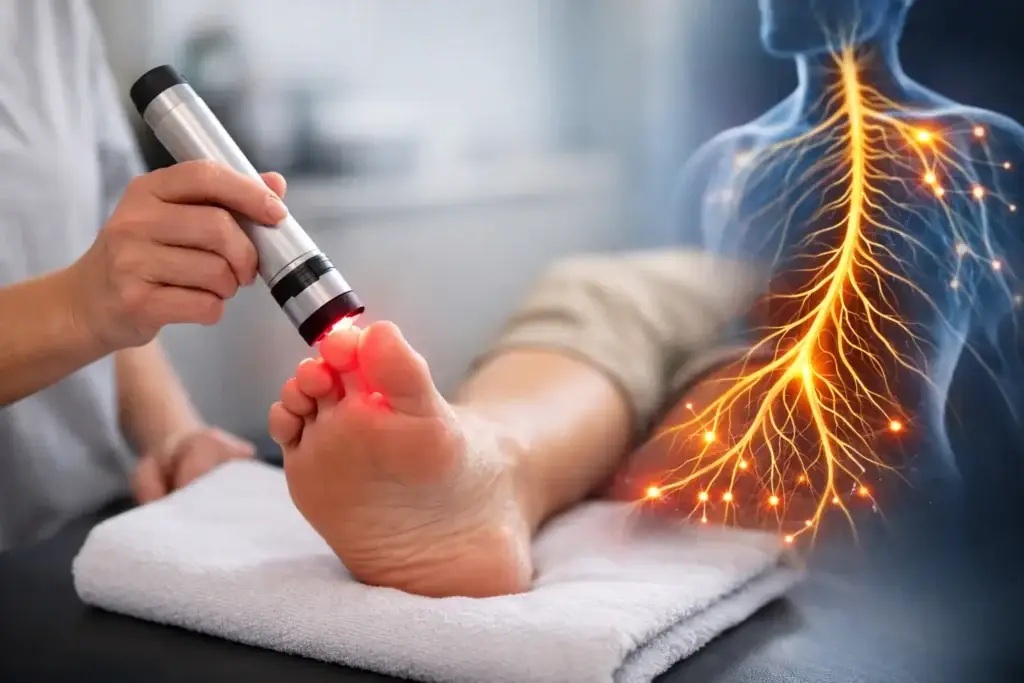
If your feet burn at night, your toes feel numb, or walking starts to feel unstable, neuropathy is no longer a vague diagnosis – it is something shaping your daily routine. That is why many patients ask about cold laser therapy for neuropathy when medications, injections, or standard home care have not delivered enough relief.
Neuropathy can be frustrating because the symptoms are disruptive, but the underlying cause is not always simple. Some people develop peripheral nerve damage from diabetes. Others develop it after spinal problems, injury, inflammation, poor circulation, chemotherapy, or chronic compression of the nerves. The result can include burning, tingling, stabbing pain, hypersensitivity, numbness, weakness, or a feeling that your socks are bunched up under your feet when they are not.
Cold laser therapy is one non-invasive option that may help in the right clinical setting. It is not a cure-all, and it is not the correct treatment for every patient. But when used as part of a targeted treatment plan, it can play a meaningful role in reducing symptoms and improving function.
What is cold laser therapy for neuropathy?
Cold laser therapy for neuropathy uses low-level light energy to stimulate cellular activity in affected tissues without heating or damaging the skin. You may also hear it called low-level laser therapy or photobiomodulation. The goal is not to mask symptoms for a few hours. The goal is to support tissue repair, improve local circulation, calm inflammation, and help irritated nerves function more normally.
This matters because damaged or stressed nerves often exist in an unhealthy tissue environment. Blood flow may be poor. Inflammation may be high. Cellular energy production may be impaired. A properly selected laser protocol is designed to influence those factors at the tissue level.
For patients, the experience is usually straightforward. The treatment area is exposed, the laser applicator is placed over the targeted region, and the session is completed in a short office visit. Most people describe it as painless. There is no incision, no anesthesia, and no recovery downtime.
How cold laser therapy may help nerve symptoms
Neuropathy symptoms do not all come from the same mechanism, which is one reason treatment results can vary. In some cases, the issue is direct peripheral nerve irritation. In others, nerve roots may be involved because of spinal disc problems or chronic compression. Some patients have a metabolic component, while others have a trauma-related pattern.
Cold laser therapy may help by improving microcirculation, reducing inflammatory activity, and stimulating cellular repair processes. Better circulation can matter because nerves depend on oxygen and nutrients to heal. Lower inflammation can matter because irritated tissue around a nerve can amplify pain and sensitivity. Improved cellular energy production can matter because damaged tissue does not recover efficiently when its metabolic activity is impaired.
This does not mean every numb foot or burning leg should be treated with laser alone. It means laser therapy can be a useful tool when the clinical exam supports it.
What symptoms may respond best
Patients often seek laser treatment for burning feet, tingling in the toes, pins-and-needles sensations, sharp nerve pain, reduced sensation, and balance problems related to poor foot awareness. Some also report cramping, skin sensitivity, or pain that worsens at night.
The best candidates are usually those who still have recoverable nerve function and who are treated before the condition becomes too advanced. Severe long-standing nerve damage can be more difficult to improve. That does not make treatment pointless, but expectations need to be realistic. In advanced cases, the goal may be symptom reduction and functional improvement rather than full resolution.
That is why an accurate diagnosis matters. If the symptoms are being driven by lumbar disc injury, spinal stenosis, or another source of nerve compression, treating only the feet may miss the real problem. A comprehensive evaluation helps determine whether neuropathy is peripheral, spinal, metabolic, injury-related, or mixed.
What a treatment plan should include
The most effective use of laser therapy is rarely one-size-fits-all. Neuropathy is a complex condition, and treatment should reflect that complexity.
A strong treatment plan starts with identifying the cause or contributing factors. That may include a focused neurological exam, musculoskeletal assessment, history of trauma, review of imaging or prior testing, and evaluation of gait, strength, reflexes, and sensory changes. If there is evidence of spinal involvement, treatment may need to address both the nerve pathway and the nerve endings where symptoms are felt.
In clinical practice, laser therapy is often combined with other non-surgical strategies depending on the patient’s findings. That may include chiropractic care when spinal mechanics are part of the problem, decompression-based care for disc-related nerve irritation, electrotherapy, targeted rehabilitation, or other therapies aimed at restoring function rather than just dulling pain.
This is especially important for patients who have already tried medication-only care and still feel limited. Symptom suppression has value, but it is not the same as improving nerve health or mechanical stress on the nervous system.
What to expect during and after treatment
Most sessions are brief and easy to tolerate. The treatment itself is non-invasive, and many patients return to work or normal activity immediately afterward. Some people notice changes quickly, especially a reduction in pain intensity or nighttime burning. Others improve more gradually over a series of visits.
That timeline depends on several factors, including how long the neuropathy has been present, whether the cause is ongoing, the severity of nerve involvement, circulation status, metabolic health, and whether treatment is being combined with other corrective therapies.
Consistency matters. Nerves generally do not recover on the schedule of a simple muscle strain. If symptoms have been building for months or years, improvement may take a structured course of care. Patients tend to do better when treatment is delivered according to a clinical plan instead of stopping after one or two sessions because the change was not immediate.
Is cold laser therapy safe?
For most patients, cold laser therapy has a strong safety profile when delivered appropriately. It is non-surgical and does not rely on medications. That makes it appealing for people who want to avoid more invasive options or who cannot tolerate certain drugs well.
That said, safe treatment still depends on proper screening and proper application. Not every pain pattern is neuropathy, and not every neuropathy case should be managed the same way. Clinical judgment matters. The right protocol, treatment frequency, and target area are all part of getting useful results.
The trade-offs patients should understand
The biggest advantage of cold laser therapy is that it offers a non-invasive approach aimed at tissue recovery and symptom improvement rather than temporary numbing alone. For many patients, that is exactly what makes it worth considering.
The trade-off is that results are not guaranteed, and progress is often cumulative. This is not usually a one-visit fix. It also works best when the actual driver of the neuropathy has been identified. If blood sugar remains uncontrolled, if a compressed nerve root is left untreated, or if severe tissue damage has been present for too long, the response may be limited.
That is not a reason to dismiss the therapy. It is a reason to use it intelligently.
When an advanced evaluation matters most
If you have neuropathy symptoms plus back pain, sciatica, leg weakness, changes in balance, or symptoms that started after an auto injury or other trauma, a more detailed workup is especially important. Those patterns can point to a broader nerve problem than simple peripheral neuropathy.
In a setting that focuses on complex nerve and spine cases, the evaluation is not just about asking where it hurts. It is about determining why the nerve is under stress, whether the damage is ongoing, and which combination of therapies gives you the best chance at meaningful improvement. That is the standard of care patients should look for, especially when they have already been through unsuccessful treatment elsewhere.
At DeSalvo Chiropractic, that kind of clinical decision-making is central to how chronic nerve pain cases are approached, particularly for patients who need more than a generic wellness plan.
Is cold laser therapy for neuropathy worth considering?
For the right patient, yes. If you are dealing with burning, tingling, numbness, or nerve pain that is limiting sleep, walking, or day-to-day confidence, cold laser therapy may be a valuable part of a broader non-surgical treatment strategy. The key is not simply accessing the technology. The key is using it within a diagnosis-driven plan that addresses the source of nerve irritation and your overall function.
When neuropathy starts changing how you move through the day, waiting it out is rarely the best strategy. The earlier you identify the cause and begin focused care, the better your chances of protecting function and getting back some normalcy.