
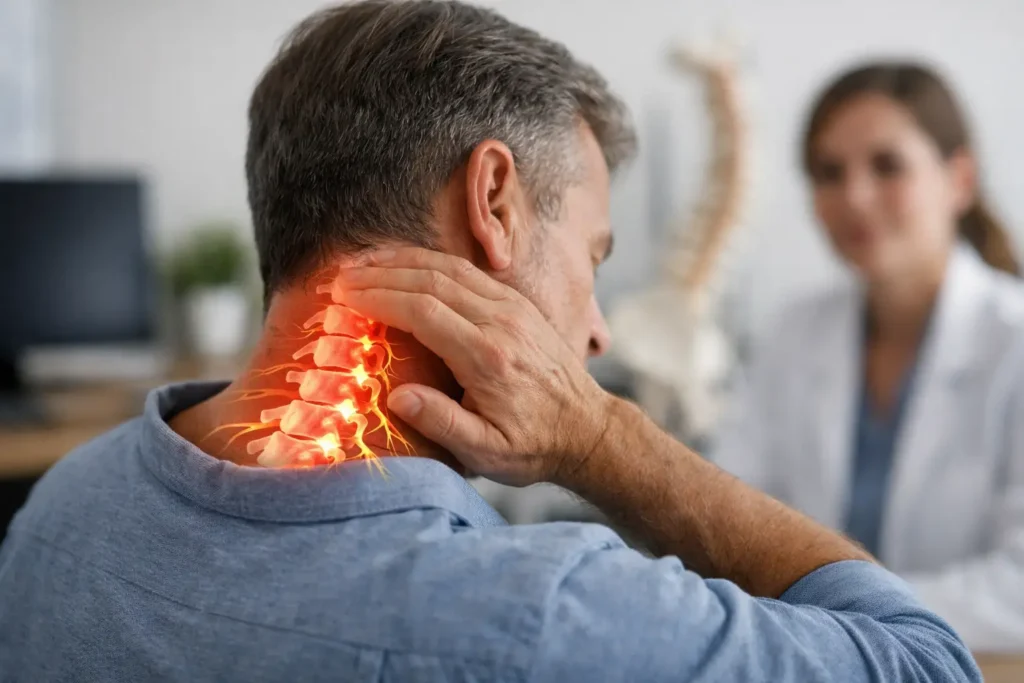
A sharp ache at the base of the neck can be frustrating on its own. When that pain starts traveling into the shoulder, arm, hand, or even causes tingling and weakness, the issue may be more than muscle tension. In many cases, neck pain nerve treatment is needed because an irritated or compressed nerve is driving the symptoms.
That distinction matters. Muscle soreness often improves with rest, stretching, or time. Nerve-related neck pain tends to linger, radiate, and interfere with sleep, work, driving, lifting, and even simple head movement. If the real problem is pressure on a nerve, temporary relief measures may not be enough.
What nerve-related neck pain usually means
The cervical spine contains seven vertebrae, spinal discs, joints, ligaments, muscles, and nerve roots that travel from the neck into the shoulders and arms. If one of those nerve roots becomes inflamed, compressed, or mechanically irritated, symptoms can spread beyond the neck.
This is why patients often describe neck pain along with burning in the shoulder blade, numbness in the fingers, reduced grip strength, or pain that worsens when turning the head. The pattern depends on which nerve is involved and what is causing the irritation.
A few of the more common causes include disc bulges or herniations, degenerative disc changes, bone spurs, spinal joint dysfunction, postural stress, and injuries from car accidents or falls. Whiplash is especially common because it can strain soft tissues and destabilize the cervical spine at the same time. In some patients, the nerve itself is not severely damaged, but surrounding inflammation and altered mechanics keep aggravating it.
When neck pain nerve treatment becomes more urgent
Not every episode of neck pain requires advanced care, but certain symptoms should not be brushed aside. Radiating arm pain, persistent tingling, numbness, weakness, dropping objects, headaches tied to neck movement, or pain that has not improved after weeks of self-care all deserve a more complete evaluation.
If symptoms are progressing, the question is not just how to reduce pain. It is whether the nerve is continuing to be irritated and whether the underlying cause is becoming harder to reverse.
This is where a more precise workup matters. The right treatment plan depends on identifying whether the problem is primarily disc-related, joint-related, injury-related, or part of a broader neurologic pattern. Treating all neck pain the same way can miss the real driver of symptoms.
Neck pain nerve treatment should match the cause
The most effective neck pain nerve treatment is not a one-size-fits-all protocol. It should be based on the patient’s symptoms, exam findings, imaging when appropriate, and functional limitations.
For some people, the main issue is mechanical compression from a disc problem. For others, inflammation after trauma is sensitizing the nerve. In more complex cases, there may be a mix of spinal dysfunction, muscular guarding, and neurologic irritation. That is why short-term symptom masking often falls short. If the structure irritating the nerve is still there, the symptoms usually return.
Cervical decompression and disc-related nerve pain
When a cervical disc is bulging or herniated, pressure on nearby nerve tissue can trigger pain, numbness, and weakness into the arm. In those cases, non-surgical decompression may be considered as part of a broader treatment plan. The goal is to reduce stress on the affected spinal segment, improve disc mechanics, and create a better environment for healing.
This approach is not appropriate for every patient, and proper case selection matters. But for the right disc-related presentation, decompression can offer a non-surgical path for patients trying to avoid injections or surgery.
Chiropractic care and spinal mechanics
When joints in the cervical spine are not moving well, surrounding tissues often tighten, posture worsens, and nerve irritation can increase. Skilled chiropractic treatment may help restore motion, reduce abnormal joint stress, and improve how the neck and upper back function together.
That said, this is where experience matters. A patient with acute radiculopathy, trauma, advanced degeneration, or a significant disc issue may need a modified approach rather than routine manipulation. A clinically sophisticated exam helps determine what type of care is appropriate and what should be avoided.
Laser therapy, electrotherapy, and inflammation control
Nerve pain is not always just about compression. Inflammation can amplify symptoms and slow recovery, especially after injury or in chronic cases. Advanced therapies such as Class IV laser therapy, cold laser therapy, and electrotherapy are often used to support tissue healing, calm irritated nerves, and reduce pain without relying solely on medication.
These modalities are not magic fixes, and results vary based on the diagnosis. Still, they can play a valuable role when integrated into a targeted treatment plan rather than used as stand-alone symptom relief.
Rehabilitation and stability work
Once pain begins to improve, the next step is protecting that progress. Many patients with recurring neck and nerve symptoms have underlying movement problems, weak postural support, or compensations developed over months or years.
Structured rehabilitation helps retrain the neck, shoulders, and upper back so the irritated area is not repeatedly overloaded. Without that step, it is common to feel better temporarily but flare up again when normal activity resumes.
Why diagnosis comes before treatment
Patients often arrive after trying pain medication, massage, home stretching, or general physical therapy with limited success. That does not always mean those options were wrong. It may mean the diagnosis was incomplete or the treatment was too generic.
A thorough evaluation should look at more than where it hurts. It should assess neurologic findings, range of motion, spinal mechanics, disc involvement, injury history, and whether symptoms suggest true nerve root irritation versus referred pain from muscles or joints.
This is especially important in more complex cases, including chronic symptoms, post-accident injuries, recurring headaches, and pain paired with numbness or weakness. In those situations, a root-cause approach can save time, reduce trial and error, and improve the chances of lasting relief.
What patients can realistically expect
The right non-surgical treatment can reduce pain, improve mobility, and help restore function, but recovery timelines vary. A mild, recent nerve irritation may respond fairly quickly. A chronic disc problem or trauma-related condition usually takes longer and may require several phases of care.
That is why honest expectations matter. The goal is not only to make the neck feel looser for a day or two. The real goal is to reduce nerve irritation, improve stability, and help the patient return to normal activity with less risk of recurrence.
There are also cases where conservative care has limits. Severe or progressive neurologic loss, major structural compromise, or certain medical red flags may require co-management or referral. Good care is not about forcing every case into one treatment model. It is about choosing the most appropriate path based on the findings.
Choosing a provider for neck pain nerve treatment
If your symptoms include radiating arm pain, tingling, numbness, or weakness, it makes sense to look for a provider who regularly works with spinal and nerve-related conditions, not just general neck stiffness. Experience with disc injuries, trauma cases, and advanced diagnostic reasoning can make a major difference.
A strong clinic should be able to explain what is causing your symptoms, why a particular treatment is being recommended, and how progress will be measured. That level of clarity matters, especially for patients who have already been through failed treatment attempts.
At a center such as DeSalvo Chiropractic, that often means combining detailed evaluation with condition-specific care that may include chiropractic treatment, non-surgical spinal decompression, laser therapy, electrotherapy, and guided rehabilitation based on the individual case. For patients in Novato and across Marin, Sonoma, Napa, and the greater Bay Area, that kind of comprehensive non-surgical approach can be especially valuable when standard care has not resolved the problem.
Pain that shoots from the neck into the arm is your body’s way of saying the issue may be deeper than muscle strain. The sooner the true source is identified, the better the chance of calming the nerve, protecting function, and getting back to daily life with more confidence.