
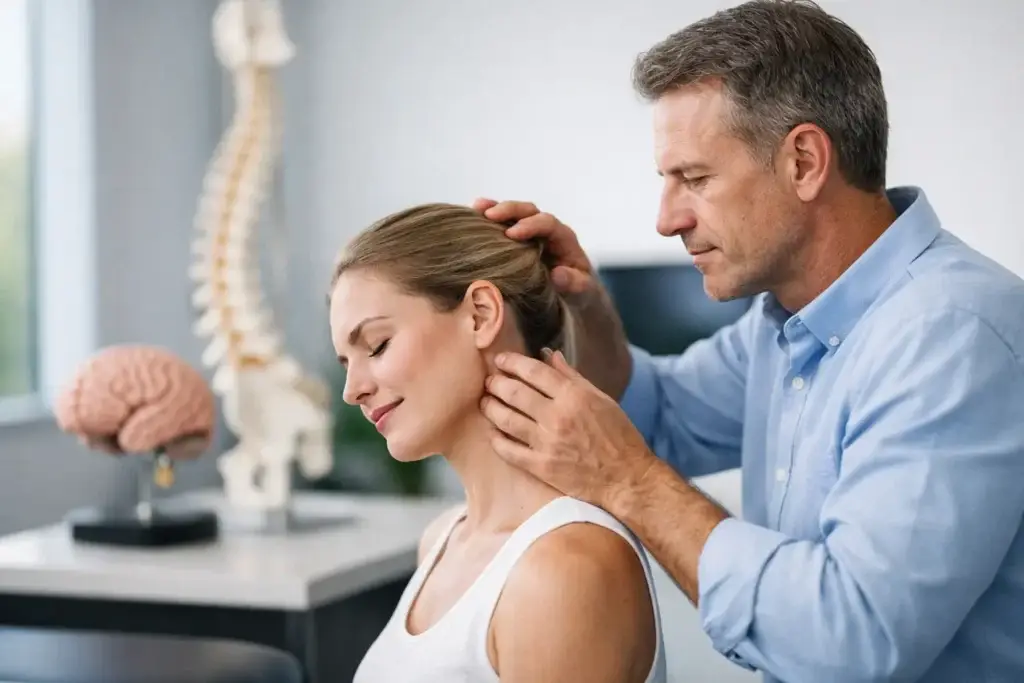
A patient may have an MRI showing a disc bulge, yet the bigger day-to-day problem is not the image itself. It may be the leg that feels unreliable on stairs, the headache that follows a long workday, the burning feet that interrupt sleep, or the neck pain that returns every time they turn their head. Brain based chiropractic care looks beyond the painful area to consider how the brain, spinal cord, peripheral nerves, joints, and muscles are communicating.
For people with persistent pain, nerve symptoms, or recovery challenges after an injury, that broader view can be meaningful. The goal is not to label every symptom as a “brain problem.” It is to identify whether altered sensory input, impaired movement patterns, nerve irritation, or poor coordination may be contributing to pain and limited function – then build a treatment plan around the findings.
What Brain Based Chiropractic Care Evaluates
The nervous system is constantly receiving information from the body. Joints tell the brain where the body is in space. Muscles report tension and movement. The eyes and inner ears help guide balance and orientation. The brain processes those signals and helps coordinate posture, movement, reflexes, and protective responses.
Pain, trauma, inflammation, prolonged guarding, and reduced movement can affect this system. After a car accident, for example, a person may have obvious neck pain but also dizziness, headaches, visual sensitivity, poor balance, or difficulty concentrating. A patient with chronic low back pain may avoid certain movements for months, leading to stiffness, weakness, and less accurate feedback from the spine and lower extremities.
A brain-based approach considers these relationships during examination. Depending on the patient’s symptoms, an evaluation may include posture and gait observation, range-of-motion testing, balance and coordination screening, sensory testing, reflexes, muscle strength, and assessment of how symptoms change with specific movements or positions. For nerve-related complaints, the examination may also help distinguish between possible spinal nerve involvement, peripheral neuropathy, local tissue irritation, or another cause that requires medical referral.
This is not a substitute for appropriate medical imaging, laboratory testing, or specialist care when those are indicated. Rather, it adds clinical information that can help guide conservative treatment and rehabilitation.
Why the Brain-Spine Connection Matters in Pain Care
Pain is protective. When the body detects potential threat or tissue irritation, the nervous system can increase sensitivity, restrict movement, and create muscle guarding. Those responses can be useful in the short term. When they persist, however, they may interfere with sleep, work, exercise, and confidence in movement.
That does not mean pain is “all in your head.” It means the experience of pain involves more than one structure. A herniated disc can irritate a nerve root. A joint injury can limit motion. A strained muscle can become reactive. At the same time, the nervous system may become more sensitive to movement or sensory input after prolonged pain or trauma.
Effective care often needs to address both sides of the problem: the mechanical contributors and the nervous system’s response. For one patient, that may mean reducing pressure associated with a disc condition while restoring comfortable movement. For another, it may mean improving neck mobility, reducing headache triggers, and retraining balance after an accident. The right plan depends on the diagnosis, severity of symptoms, medical history, and the patient’s goals.
Treatment Is Built Around Findings, Not a One-Size-Fits-All Protocol
A detailed exam should lead to a specific treatment strategy. If the primary issue is mechanical back pain with restricted spinal motion, chiropractic treatment and targeted rehabilitation may be appropriate. If an exam suggests nerve compression associated with a disc injury, non-surgical spinal decompression may be considered as part of a broader program. If pain is limiting activity because of tissue irritation, laser therapy, electrotherapy, or shockwave therapy may have a role depending on the condition.
Brain-based methods may be incorporated through carefully selected exercises and sensory-motor work. This can include eye movement or visual tracking drills, balance tasks, coordination exercises, gentle movement progressions, gait training, and proprioceptive activities that improve awareness of body position. These interventions are not interchangeable, and they are not appropriate for every patient.
For example, someone with peripheral neuropathy may need a program centered on circulation, nerve-focused evaluation, balance, foot sensation, and fall-risk reduction. A patient with sciatica may need treatment directed at the lumbar spine, nerve irritation, hip function, and progressive strengthening. A person with post-traumatic headaches may require a more cautious assessment of cervical function, vestibular symptoms, and neurological red flags before treatment begins.
At DeSalvo Chiropractic, treatment planning is designed to connect symptoms with objective clinical findings and practical functional goals. Relief matters, but so do the outcomes that shape daily life: walking farther, sitting through a meeting, sleeping more comfortably, returning to exercise, or feeling steady enough to move without fear.
Conditions That May Benefit From This Approach
Brain based chiropractic care is often considered for patients whose symptoms involve both pain and nervous system function. Common examples include chronic neck or back pain, sciatica, disc-related symptoms, headaches, whiplash injuries, balance concerns, peripheral neuropathy, and persistent musculoskeletal pain after a motor vehicle collision.
It can also be useful when a patient has tried rest, medication, or generalized treatment without a clear path forward. That does not mean every unresolved symptom requires a brain-based program. Sometimes the missing piece is a more accurate diagnosis, imaging, co-management with another provider, or a different rehabilitation progression.
A careful clinician should also recognize when chiropractic care is not the right first step. New or worsening weakness, loss of bowel or bladder control, saddle numbness, severe unrelenting headache, sudden speech or vision changes, chest pain, fever with spinal pain, or symptoms following significant trauma require urgent medical evaluation. Complex cases deserve clinical judgment, not assumptions.
What Patients Should Expect From a Thoughtful Evaluation
The first visit should not feel like a rushed search for a quick adjustment. A meaningful assessment starts with the story behind the symptoms: when they began, what makes them better or worse, prior injuries, work demands, sleep quality, medications, previous imaging, and treatments already attempted.
The physical and neurological examination then helps determine whether conservative care is reasonable and what should be prioritized. Some patients improve quickly once the main pain generator is addressed. Others, particularly those with chronic symptoms, disc injuries, neuropathy, or trauma-related conditions, may need a structured plan with reassessments along the way.
Progress should be measured by more than a pain score. Changes in range of motion, strength, walking tolerance, balance, sensation, sleep, daily activity, and medication reliance can provide a clearer picture of whether care is helping. If progress stalls, the plan should be reconsidered rather than simply repeated.
A More Complete Path Toward Function
The appeal of brain based chiropractic care is not that it promises a cure for every painful condition. Its value is that it asks more precise questions. Is the spine moving well? Is a nerve being irritated? Has pain changed the way the body moves and balances? Are there signs that warrant imaging, medical evaluation, or a different level of care?
For patients in Marin, Sonoma, Napa, and the greater Bay Area who are tired of temporary symptom management, a comprehensive examination can provide useful direction. The most productive next step is often not guessing which treatment will work, but identifying the factors that are keeping the body from moving, healing, and functioning with greater confidence.