
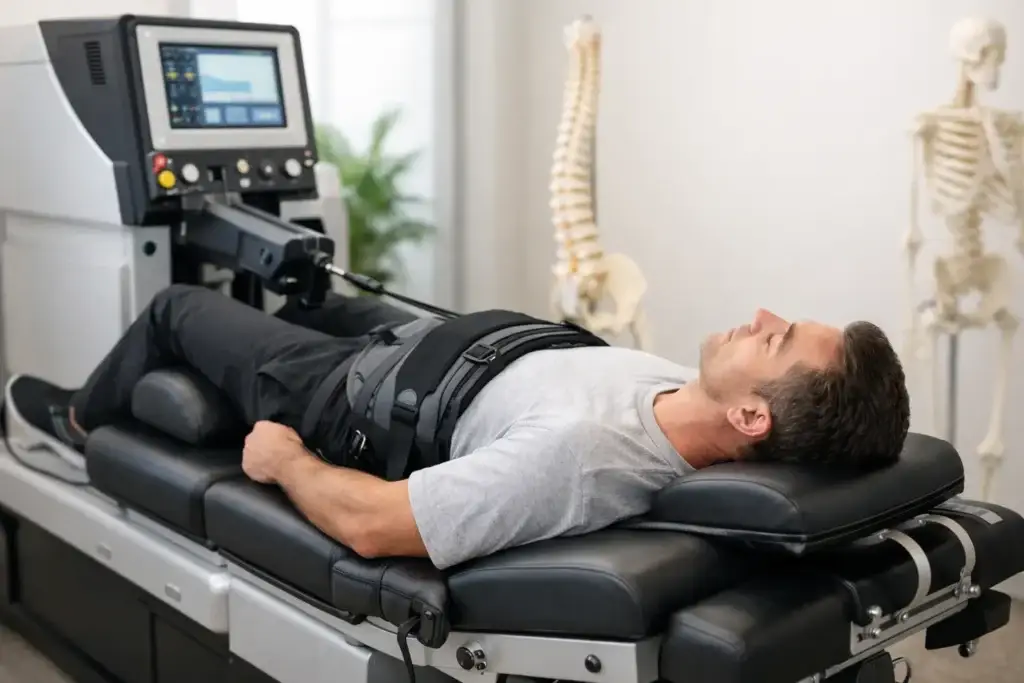
A disc problem can make ordinary movements feel risky. Sitting through a workday, getting out of a car, bending to pick something up, or sleeping through the night may trigger back pain that shoots into the hip, leg, or foot. For patients facing these limitations, accu spina decompression therapy may offer a non-surgical option designed to reduce pressure on irritated spinal structures and support a more comfortable recovery.
Accu-SPINA is not a generic traction table. It is a computerized spinal decompression system that delivers controlled, targeted treatment based on the area of the spine involved and the patient’s tolerance. At DeSalvo Chiropractic, it may be incorporated into a customized plan for patients with disc-related pain, sciatica, degenerative changes, and other complex spinal conditions when a clinical evaluation indicates it is appropriate.
What Is Accu Spina Decompression Therapy?
Accu-SPINA decompression therapy uses gentle, computerized distraction to create carefully controlled changes in pressure within the spine. During treatment, the patient lies comfortably on a specialized table while a harness helps stabilize the body. The system applies and releases traction in programmed cycles rather than using one continuous pull.
The purpose is to reduce compressive loading on spinal discs and nerve-sensitive structures. In certain cases, this may help improve fluid exchange within a disc, reduce mechanical irritation, and create a more favorable environment for healing. The treatment is typically focused on the lumbar spine for low back pain and sciatica, although treatment recommendations depend on the individual diagnosis.
This distinction matters. Back pain is not always caused by a disc. Facet joint irritation, spinal stenosis, muscle injury, hip dysfunction, peripheral nerve problems, and trauma-related conditions can produce overlapping symptoms. Effective care begins with identifying the most likely pain generator, not simply applying decompression because someone has back pain.
When Disc Decompression May Be Considered
A thorough consultation and examination help determine whether a patient may be a candidate. Accu-SPINA may be considered for people whose symptoms are consistent with disc involvement, especially when pain persists despite rest, medication, basic exercise, or conventional care.
Common presentations include low back pain that worsens with sitting or bending, pain traveling from the low back into the buttock or leg, numbness or tingling associated with sciatica, and symptoms related to a bulging or herniated disc. Some patients seek care after a car accident, when the force of trauma has aggravated a pre-existing degenerative condition or caused a new spinal injury.
Imaging, prior medical records, neurological findings, and a detailed symptom history can all be useful. A patient with leg pain may need a different approach than someone with localized back stiffness. Likewise, a person with long-standing degeneration may need a slower, more comprehensive treatment plan than someone with a recent disc flare-up.
Conditions that may respond differently
Decompression is not a one-size-fits-all solution, and it is not appropriate for every spinal diagnosis. Patients with fractures, spinal instability, certain advanced bone conditions, active infection, cancer involving the spine, or some surgical histories may require another form of care or medical referral. Pregnancy and implanted devices can also affect treatment decisions.
Severe or progressive weakness, loss of bowel or bladder control, saddle-area numbness, fever with back pain, or unexplained weight loss require prompt medical evaluation. These symptoms should never be managed as routine mechanical back pain.
What a Treatment Session Feels Like
Many patients are concerned that decompression will be painful, particularly when they are already dealing with a sensitive disc or nerve. The intended experience is gradual and controlled, not forceful. Patients are secured in a comfortable position, and the computerized system delivers a series of gentle pulling and relaxation phases according to the prescribed protocol.
Some patients notice a mild stretching sensation in the low back or hips. Others feel little during the session but report that standing, walking, or sitting is more manageable afterward. Temporary soreness can occur, especially early in care or when surrounding muscles have been guarding for a long time. Treatment parameters can be adjusted based on comfort and clinical response.
A session usually lasts long enough to allow the decompression cycles to work without rushing the process. The number and frequency of visits vary. Acute pain, chronic disc degeneration, neurological symptoms, physical demands at work, and response to care all influence the recommended schedule.
Why Decompression Works Best as Part of a Plan
A painful disc rarely exists in isolation. When the nervous system is irritated, surrounding muscles often tighten to protect the area. Movement patterns change. Core stability may decline because certain movements feel unsafe. If treatment addresses pressure alone but ignores mobility, nerve irritation, strength, and daily habits, the improvement may not hold.
For that reason, a comprehensive plan may combine Accu-SPINA with chiropractic care, therapeutic laser, electrotherapy, targeted rehabilitation, and guidance on activity modification. The right combination depends on the patient. A person with acute sciatica may initially need symptom relief and gentle stabilization, while someone recovering from a longstanding disc condition may benefit from a more progressive rehabilitation strategy.
The goal is not simply to help a patient feel better for a day. It is to improve function: sitting with less pain, returning to walking or exercise, tolerating work tasks, and reducing the fear that a routine movement will trigger another flare-up. Measurable changes in pain levels, range of motion, strength, neurological symptoms, and activity tolerance help guide the plan over time.
What Results Can You Realistically Expect?
Some patients experience relief early in treatment, while others improve gradually as inflammation settles and movement becomes easier. Results depend on several factors, including the nature and severity of the condition, how long symptoms have been present, the degree of nerve involvement, overall health, and whether the patient can follow through with recommended rehabilitation and activity changes.
Accu-SPINA decompression therapy should not be presented as a guaranteed cure or a replacement for appropriate medical care. Research on spinal decompression and traction shows variable outcomes, in part because back pain has many causes and treatment protocols differ. In a properly selected patient, however, non-surgical decompression can be a valuable component of a conservative care program.
The most useful question is not, “Will this work for everyone?” It will not. The better question is whether the findings from your examination, imaging, and symptom pattern suggest that controlled decompression addresses a meaningful part of your problem.
A More Precise Path Before Considering Surgery
Surgery may be necessary in certain situations, particularly with serious neurological compromise or structural conditions that cannot be managed conservatively. But many people are understandably interested in exhausting appropriate non-surgical options first. For patients in Marin, Sonoma, Napa, and the greater Bay Area, an advanced evaluation can clarify whether decompression belongs in that process.
A careful plan should account for more than a scan result. It should consider where symptoms travel, what movements aggravate them, whether there is measurable nerve dysfunction, how the injury occurred, and what treatments have already failed. That level of precision is especially important for patients who have been told to “just live with it” or who have tried multiple approaches without lasting change.
Persistent back or leg pain deserves more than a temporary workaround. When the clinical picture supports it, Accu-SPINA can provide a controlled, non-invasive way to address disc-related pressure while a broader treatment plan helps restore the strength, movement, and confidence needed for everyday life.