
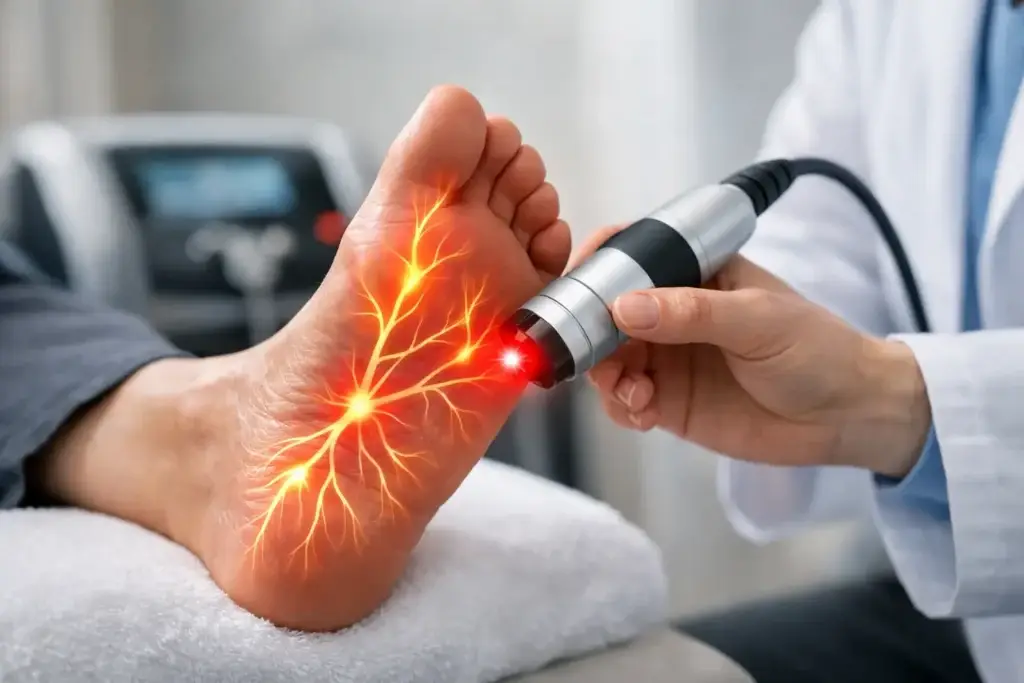
Burning feet at night, pins-and-needles sensations, numbness that makes walking less certain, or sharp pain from a light touch can make everyday life feel smaller. Many patients ask, can laser therapy help neuropathy when medications, injections, or basic home remedies have not delivered enough relief. For the right patient, laser therapy can be a valuable non-invasive part of a broader neuropathy treatment plan – but it is not a standalone cure, and results depend on the cause and severity of nerve dysfunction.
What Neuropathy Symptoms Can Feel Like
Peripheral neuropathy occurs when nerves outside the brain and spinal cord are injured, irritated, or not functioning normally. Symptoms often begin in the feet and lower legs, though they can affect the hands as well. Some people experience pain, while others primarily notice numbness, weakness, poor balance, temperature sensitivity, or the feeling that they are walking on a cushion.
Neuropathy is not one condition with one cause. Diabetes and prediabetes are common contributors, but nerve symptoms may also be related to spinal disc problems, sciatica, nerve compression, prior injury, circulation issues, vitamin deficiencies, certain medications, autoimmune conditions, or chemotherapy. This distinction matters. A patient with burning feet related to metabolic neuropathy may need a different care strategy than someone whose symptoms are being driven by lumbar nerve-root compression.
That is why a meaningful evaluation should look beyond the symptom itself. The clinical question is not simply, “How do we quiet the pain?” It is, “What is affecting this nerve, and what can be done to improve its environment and function?”
Can Laser Therapy Help Neuropathy Symptoms?
Laser therapy uses specific wavelengths of light energy to stimulate biological activity in treated tissues. In a clinical setting, the goal is photobiomodulation: supporting cellular energy production, circulation, tissue repair processes, and modulation of inflammation. For people with neuropathy, these effects may help reduce nerve-related discomfort and support improved function over time.
Class IV laser therapy delivers higher-powered therapeutic light than many consumer devices and is administered according to a clinician-designed protocol. Depending on the patient’s needs, treatment may focus on symptomatic areas such as the feet and lower legs, as well as the pathway of the involved nerve and related spinal structures.
Patients often seek laser therapy for symptoms such as burning, tingling, numbness, sensitivity, aching, or cramping. Some report that their feet feel less painful at night, walking becomes more comfortable, or they have better tolerance for shoes and daily activity. Improvements can be gradual. Nerves recover slowly, and meaningful care typically requires a structured series of treatments rather than a single session.
Research into laser therapy for peripheral neuropathy is promising but still developing. It supports the potential for pain reduction and functional improvement in some populations, particularly when laser is part of a comprehensive treatment approach. It does not support promising that every patient will regenerate damaged nerves or become symptom-free. A responsible plan sets clear goals, monitors progress, and adjusts when the response is not adequate.
Why the Cause of Neuropathy Changes the Treatment Plan
A patient may have neuropathy symptoms in both feet and still have more than one contributing factor. For example, a person with prediabetes may also have lumbar stenosis, reduced circulation, or a history of ankle injury. Treating only the feet may miss an important driver of the problem.
At DeSalvo Chiropractic, neuropathy care is designed around a thorough assessment of nerve function, spinal health, movement patterns, circulation-related factors, medical history, and symptom progression. This is especially important for patients who have been told that nothing can be done beyond managing symptoms.
When spinal nerve irritation or disc-related compression is contributing to leg and foot symptoms, treatment may include targeted chiropractic care, non-surgical spinal decompression, or rehabilitation in addition to laser therapy. When muscle weakness, poor balance, or altered gait are present, a focused exercise strategy may also be necessary. The most effective plan is the one that matches the actual clinical picture.
What a Laser Therapy Visit Is Like
Laser treatment is generally comfortable and non-invasive. The clinician moves the laser applicator over the targeted area according to the treatment protocol. Patients may feel gentle warmth with certain Class IV laser settings, but treatment should not be painful. Sessions are typically brief, and there is no downtime afterward.
The number of visits varies based on symptom duration, the suspected cause of neuropathy, overall health, and response to care. Recent or mild symptoms may respond differently than long-standing neuropathy accompanied by significant numbness, balance changes, or vascular concerns. Consistency matters because the therapeutic effect is intended to build over a series of visits.
Progress should be measured by more than a pain score. Useful markers include fewer nighttime awakenings, reduced burning or tingling, improved ability to walk or stand, better tolerance for footwear, improved balance, and increased confidence with everyday movement. If symptoms are progressing despite treatment, the plan should be reassessed promptly.
Laser Therapy Is Not a Substitute for Medical Evaluation
New, rapidly worsening, or one-sided numbness should never be dismissed as routine neuropathy. Sudden weakness, loss of bowel or bladder control, severe back pain with leg weakness, a cold or discolored foot, open sores, or signs of infection require urgent medical evaluation.
Patients with diabetes should continue regular medical care, glucose monitoring, and foot checks. Reduced sensation can make it easier to miss blisters, pressure injuries, or wounds. Laser therapy may support a broader care plan, but it does not replace diabetes management, vascular assessment, medication review, or specialist referral when those are indicated.
A qualified provider should also review health history before beginning treatment. Certain situations, including active cancer in the treatment area, pregnancy precautions, photosensitivity, or impaired sensation that affects feedback during care, may change how treatment is performed or whether it is appropriate.
Who May Be a Good Candidate?
Laser therapy may be worth considering for adults with persistent neuropathy symptoms who want a conservative option and are willing to follow a structured plan. It can be particularly relevant for people who have not achieved adequate relief with medication alone, prefer to avoid more invasive options when possible, or need care that addresses both symptoms and contributing musculoskeletal factors.
It may be less likely to provide meaningful results when the underlying cause remains uncontrolled. For instance, untreated diabetes, ongoing alcohol-related nerve injury, a severe nutritional deficiency, or progressive spinal compression can continue to aggravate nerves. In these cases, laser therapy may still have a supportive role, but it must be combined with appropriate medical and lifestyle interventions.
The best candidates understand the trade-off: non-invasive care is often low risk and well tolerated, but it requires patience, consistent attendance, and an honest assessment of results. No ethical clinician should guarantee nerve regeneration or promise a specific outcome before evaluating the source of the symptoms.
Questions to Ask Before Starting Laser Therapy
Ask what type of laser will be used and why it is appropriate for your condition. Clinical Class IV and cold laser systems differ from over-the-counter light devices in power, protocol, and supervision. It is also reasonable to ask how progress will be tracked and what the next step will be if your symptoms do not improve.
Most importantly, ask whether your provider has evaluated possible causes beyond the painful area. A neuropathy plan should account for the entire nerve pathway, from the spine and nerve roots through the legs or arms to the areas where symptoms are felt.
Relief from neuropathy starts with taking persistent symptoms seriously. If burning, numbness, or balance changes are limiting your life, a comprehensive evaluation can clarify whether laser therapy belongs in your care plan and identify the factors that deserve attention before nerve problems become harder to manage.