
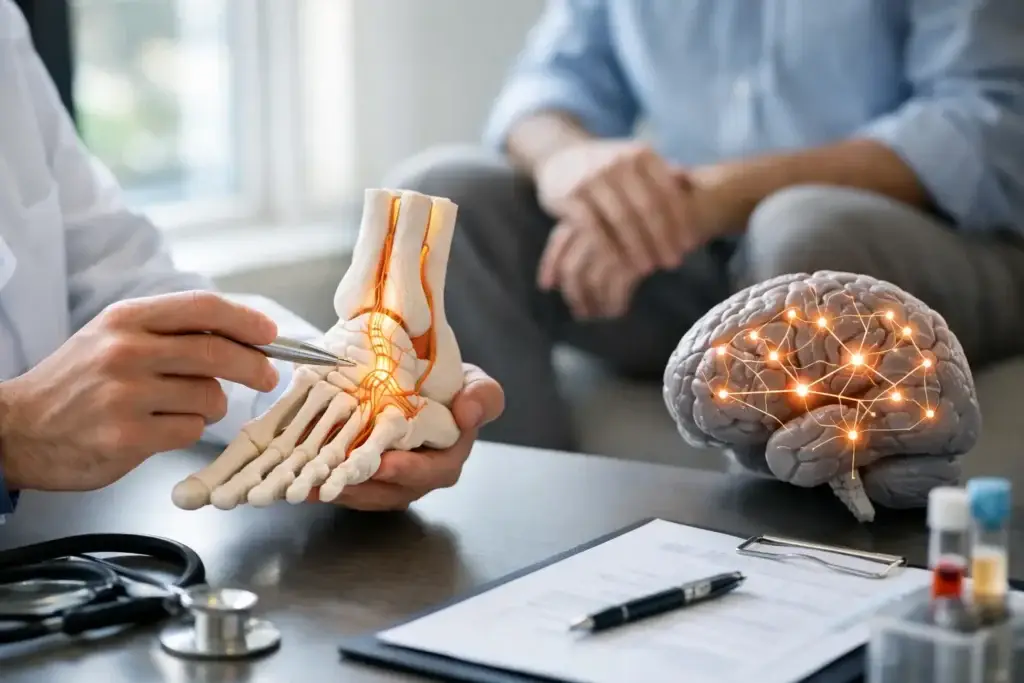
Burning feet at night, numb toes, sudden jolts of pain, or a growing sense that the floor feels unsteady are not symptoms to simply push through. Effective neuropathy treatment begins by identifying what is affecting the nerves, how far symptoms have progressed, and which factors may be limiting healing. The goal is not merely to make discomfort more tolerable. It is to improve nerve function, protect mobility, and help patients return to daily activities with greater confidence.
Peripheral neuropathy can be frustrating because symptoms often fluctuate. A person may feel tingling after sitting, pain when trying to sleep, or weakness while walking through the grocery store. Many have already tried medication, supplements, or temporary measures without understanding why symptoms continue. A comprehensive, non-surgical plan can provide a more targeted path forward.
What Peripheral Neuropathy Can Feel Like
Peripheral nerves carry messages between the brain, spinal cord, muscles, skin, and internal systems. When those nerves are irritated, compressed, injured, or metabolically damaged, the messages can become distorted. Symptoms frequently start in the feet and lower legs, though the hands may also be affected.
Neuropathy does not always feel the same. Some patients describe burning, pins-and-needles sensations, electric shocks, cramping, or hypersensitivity to socks and bed sheets. Others notice numbness, reduced temperature awareness, poor balance, leg weakness, or a feeling of walking on a thick cushion. Symptoms can be mild at first, but progressive nerve dysfunction may interfere with sleep, work, exercise, driving, and fall prevention.
Not every case of tingling is neuropathy. Nerve-root irritation from the lower back, sciatica, spinal stenosis, disc injury, circulation problems, and certain musculoskeletal conditions can produce similar complaints. That distinction matters because treating the wrong source may delay meaningful improvement.
Why a Complete Evaluation Changes Neuropathy Treatment
A successful plan requires more than matching a symptom to a standard protocol. The first question is whether the nerve issue is systemic, local, spinal, injury-related, or influenced by several factors at once.
Diabetes and prediabetes are common contributors to peripheral neuropathy, but they are not the only ones. Previous chemotherapy, nutritional deficiencies, thyroid dysfunction, alcohol use, autoimmune disease, medication effects, infections, trauma, and chronic nerve compression may all play a role. A history of lower back pain, herniated discs, surgery, or motor vehicle trauma can be especially relevant when symptoms are more noticeable on one side or travel down a specific leg.
An appropriate clinical assessment considers symptom pattern, medical history, movement quality, balance, sensation, reflexes, muscle strength, and spinal function. When indicated, coordination with a primary care physician, neurologist, or other medical provider may be necessary for laboratory testing, imaging, medication review, or further diagnostic evaluation.
This process helps establish realistic expectations. Long-standing nerve damage may not resolve at the same pace as a newer problem caused by compression or inflammation. Even when full sensation does not immediately return, reducing pain, improving stability, and slowing further functional loss can be meaningful outcomes.
A Multimodal Approach to Neuropathy Treatment
Because nerve dysfunction can have multiple contributors, care often works best when it addresses several clinical priorities at the same time: reducing irritation, improving circulation and tissue health, restoring movement, and supporting safer nerve and muscle communication.
At DeSalvo Chiropractic, a Spine & Injury Center, treatment programs are individualized rather than built around a one-size-fits-all visit schedule. Dr. Douglas DeSalvo, DC, QME, BCN, is Board Certified in Neuropathy and evaluates how spinal mechanics, injury history, nerve function, and daily movement demands may be contributing to each patient’s condition.
Addressing Spinal and Nerve Compression
For some patients, neuropathy-like symptoms are aggravated by pressure or irritation involving the spine and nerve roots. Disc bulges, degenerative changes, narrowing around the nerves, and persistent biomechanical stress can contribute to pain, numbness, or weakness in the legs and feet.
Chiropractic care may be used to improve joint motion, reduce mechanical strain, and support healthier movement patterns when clinically appropriate. Non-surgical spinal decompression may also be considered for qualifying disc-related cases. Using controlled traction, decompression is designed to reduce pressure within affected spinal segments and may help create a more favorable environment for irritated nerve structures.
This is not the right treatment for every person with neuropathy. It is most relevant when the examination indicates a spinal component. A precise diagnosis protects patients from receiving care that does not match the source of their symptoms.
Laser Therapy and Electrotherapy
Advanced therapeutic technology may complement hands-on care and rehabilitation. MLS® Class IV laser therapy and cold laser therapy are used in appropriate cases to support tissue recovery, circulation, and pain reduction without injections or surgery. Patients often value that these treatments are non-invasive and generally well tolerated.
Electrotherapy, including HAKO-MED protocols, may be used to stimulate nerves and muscles, improve local circulation, and help reduce discomfort associated with altered nerve signaling. The treatment experience varies by patient. Some notice a gentle tingling sensation during care, while others primarily notice gradual changes in pain levels, sleep, or foot sensitivity over a series of visits.
Technology is most useful when it is part of a larger plan. It should not replace careful assessment, movement restoration, appropriate medical management, or attention to the underlying driver of nerve dysfunction.
Rehabilitation for Strength, Balance, and Safer Walking
Neuropathy can change the way a person walks long before they recognize it. To avoid pain or compensate for numbness, patients may shorten their stride, grip the floor with their toes, rely excessively on one leg, or stop being active altogether. Those adaptations can increase strain on the knees, hips, and lower back.
Structured rehabilitation helps address this functional side of neuropathy. Depending on the findings, care may include balance training, gait work, lower-extremity strengthening, mobility exercises, and home strategies that are practical for the patient’s current ability level. The objective is not simply to exercise more. It is to move more safely and efficiently.
For an older adult who is concerned about falling, improved balance and foot awareness may be the central goal. For a working professional, the priority may be standing through a shift, traveling comfortably, or sleeping without burning pain. For an injury patient, restoring normal nerve and spinal function may be essential to returning to work or recreation. The care plan should reflect those differences.
When Symptoms Require Prompt Medical Attention
Nerve symptoms deserve timely evaluation, especially when they are new, worsening, or changing quickly. Sudden weakness, loss of bladder or bowel control, numbness in the groin or saddle area, severe unexplained pain, rapidly spreading numbness, or a foot wound that is not healing require urgent medical assessment.
Patients with diabetes should take new numbness, color changes, swelling, skin breakdown, or reduced feeling in the feet seriously. Regular foot checks and appropriate footwear can help reduce the risk of injuries that go unnoticed because sensation is impaired.
A careful provider will also recognize when referral or co-management is the right next step. Non-surgical care can be valuable, but it should always be delivered within a clinically responsible plan that accounts for medical risk factors and the possibility of progressive disease.
What Progress May Look Like
Nerves generally recover slowly. Improvement is often measured in practical changes rather than a single dramatic moment: fewer nighttime pain episodes, more stable walking, less burning after activity, improved tolerance for shoes, better sleep, or increased confidence on stairs.
Response depends on the cause, severity, duration of symptoms, overall health, blood sugar control where relevant, and consistency with the treatment plan. A patient with recent nerve irritation related to a spinal problem may progress differently from someone with years of metabolic neuropathy. Honest expectations are part of quality care.
The most productive next step is a focused evaluation that looks beyond the symptom location. Burning or numb feet may originate in the feet, the peripheral nerves, the spine, or a combination of factors. Finding that distinction gives neuropathy treatment its best chance to support relief, safer movement, and a more active life.