
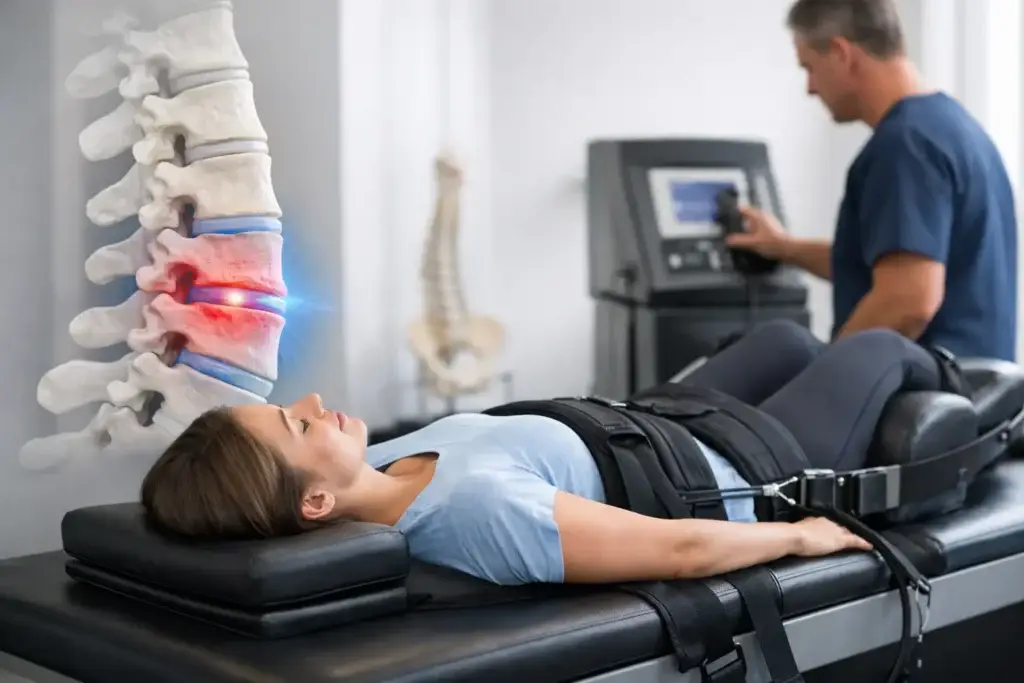
A guide to spinal decompression treatment should begin with a distinction that matters: this is not simply a relaxing traction table or a one-time stretch for a sore back. Non-surgical spinal decompression is a computerized treatment designed to gently and precisely unload targeted spinal segments. For patients with persistent low back pain, sciatica, disc-related pain, or neck symptoms that have not responded to basic care, that controlled reduction in pressure may create a meaningful opportunity for pain relief and improved function.
The right question is not, “Will decompression work for everyone?” It will not. The more useful question is whether your diagnosis, symptoms, medical history, and physical findings suggest that disc and nerve compression are contributing to your pain. A thorough evaluation helps answer that question before treatment begins.
What Spinal Decompression Treatment Does
Between the vertebrae are spinal discs that cushion movement and help distribute load. With injury, repetitive strain, degeneration, or prolonged postural stress, a disc can bulge, herniate, lose height, or become irritated. Nearby nerves may also become inflamed or compressed, producing pain that travels into the buttock, leg, arm, or hand.
Non-surgical spinal decompression uses computerized traction to apply gentle, measured distraction to the spine. Unlike basic traction, advanced decompression systems vary the pull-and-release cycle. This is intended to reduce muscle guarding while creating a lower-pressure environment within the targeted disc. The goal is to reduce mechanical stress, support fluid exchange in the disc, and ease irritation around sensitive spinal structures.
Patients are secured comfortably to the table with a support harness. The provider programs the treatment based on the affected spinal level, body size, symptom pattern, and tolerance. Most patients describe a gradual pulling sensation rather than pain. If treatment causes sharp pain, numbness, or worsening radiating symptoms, the protocol should be adjusted or stopped and reassessed.
Conditions That May Respond to Decompression
Spinal decompression is most often considered when symptoms point to a disc or nerve-related source of pain. It may be part of a conservative care plan for lumbar disc bulges or herniations, degenerative disc changes, sciatica, chronic low back pain, neck pain associated with cervical disc problems, and some cases of spinal stenosis.
Symptoms can be especially suggestive when back pain is accompanied by pain, tingling, burning, or numbness into one leg. A cervical disc problem may cause neck pain with symptoms extending into the shoulder, arm, or hand. However, radiating pain does not automatically mean a disc is the cause. Hip disorders, peripheral nerve conditions, vascular concerns, and other musculoskeletal problems can produce similar complaints.
This is why imaging alone should not determine care. Many adults have disc changes on MRI without pain, while others have severe symptoms with findings that appear modest. Clinical examination, neurologic testing, symptom behavior, injury history, and diagnostic imaging when appropriate should be considered together.
Who Is a Good Candidate for Spinal Decompression?
The best candidates are generally people with a confirmed or strongly suspected disc-related condition who can tolerate lying on the treatment table and who do not have a medical reason to avoid traction. Many have already tried medication, rest, generalized exercise, or standard chiropractic care without sufficient relief. Others want to explore a non-surgical option before considering injections or surgery.
A clinician should screen carefully for contraindications. Decompression may not be appropriate for people with spinal fracture, severe osteoporosis, spinal infection, active cancer involving the spine, certain implanted devices, significant instability, or recent spinal surgery unless cleared by the surgical team. Pregnancy and certain vascular or inflammatory conditions may also require an alternative approach.
Urgent symptoms require urgent medical assessment rather than routine decompression. New bowel or bladder changes, saddle numbness, rapidly worsening weakness, unexplained fever, major trauma, or severe pain that is escalating without explanation should never be treated as an ordinary back-pain episode.
What a Treatment Plan Usually Includes
A course of spinal decompression is not typically judged by one session. Disc tissue and irritated nerves often need time to respond, particularly when symptoms have been present for months or years. Treatment frequency and duration vary with the diagnosis, severity, functional limitations, and response to care.
At DeSalvo Chiropractic, a decompression plan may be built around the Accu-SPINA system and paired with therapies selected for the patient’s specific presentation. That can include targeted chiropractic care to address joint mechanics, Class IV laser therapy to support pain control and tissue recovery, electrotherapy for neuromuscular support, and structured rehabilitation to improve spinal stability and movement tolerance.
This combination matters because reducing pressure is only one part of recovery. If weak trunk muscles, poor movement patterns, post-injury stiffness, or repeated occupational strain continue to overload the same spinal area, symptoms can return. Rehabilitation helps patients transition from passive treatment to more confident daily movement.
What Happens During and After a Session
A decompression session commonly lasts 20 to 30 minutes, though the full visit may be longer when other therapies are included. Patients remain clothed and are positioned either face up or face down depending on the area being treated. The provider monitors comfort and can modify the settings as needed.
Some people notice reduced leg or arm pain early in care. Others experience improvement more gradually, such as being able to stand longer, sleep more comfortably, drive with less discomfort, or return to walking and exercise. Mild temporary soreness can occur as tissues adapt, especially when treatment is combined with rehabilitative exercise. A significant flare, new weakness, or increasing numbness should be reported promptly.
Benefits, Limits, and Realistic Expectations
The appeal of non-surgical decompression is clear: it is noninvasive, does not require anesthesia, and is designed to address a mechanical component of disc-related pain. For appropriate candidates, it may help reduce pain, decrease radiating symptoms, improve mobility, and support a return to work, recreation, and normal household activity.
Still, spinal decompression is not a disc “cure,” and responsible care avoids promising a perfect outcome. Long-standing degeneration, severe stenosis, major neurologic deficits, or extensive scar tissue after surgery may limit results. Some patients need co-management with a primary care physician, pain specialist, orthopedist, neurologist, or spine surgeon.
Surgery may be the better option when there is progressive muscle weakness, serious neurologic compromise, instability, or symptoms that remain disabling despite an appropriate course of conservative care. The purpose of a specialist evaluation is not to steer every patient toward decompression. It is to identify the safest, most rational next step.
Questions to Ask Before Starting Care
Before committing to a program, ask what diagnosis is being treated and what findings support it. Ask whether the provider has reviewed your imaging, if available, and whether your neurologic exam suggests nerve involvement. You should also understand how progress will be measured beyond pain scores.
Meaningful benchmarks may include walking distance, tolerance for sitting or standing, sleep quality, medication use, strength, range of motion, ability to work, and the frequency of radiating symptoms. Ask what happens if your symptoms do not improve within the expected timeframe. A clear answer should include reassessment, modification of the plan, and referral when needed.
It is also reasonable to ask what portion of the plan is decompression, what supportive therapies are recommended, and why each element is being used. Individualized care is not simply adding more treatments. It means selecting the treatments that match the problem and removing those that do not add value.
Supporting Your Results Between Visits
The habits outside the clinic influence the durability of progress. Your provider may recommend short, frequent walks, position changes during desk work, specific mobility drills, core stabilization exercises, and temporary limits on heavy lifting or repetitive bending. The exact recommendations depend on the condition. An exercise that helps one type of back pain can aggravate another.
Pay attention to symptom direction. Centralization, where pain retreats from the leg or arm and becomes more localized, can be a favorable sign in some disc-related cases. Pain that spreads farther down the limb, increasing numbness, or loss of strength deserves prompt clinical attention.
Persistent back or neck pain can make daily life feel smaller, especially when every commute, work task, or night of sleep is shaped by symptoms. A careful evaluation can determine whether spinal decompression belongs in your recovery plan and provide a clear path toward safer movement, stronger function, and lasting relief.