
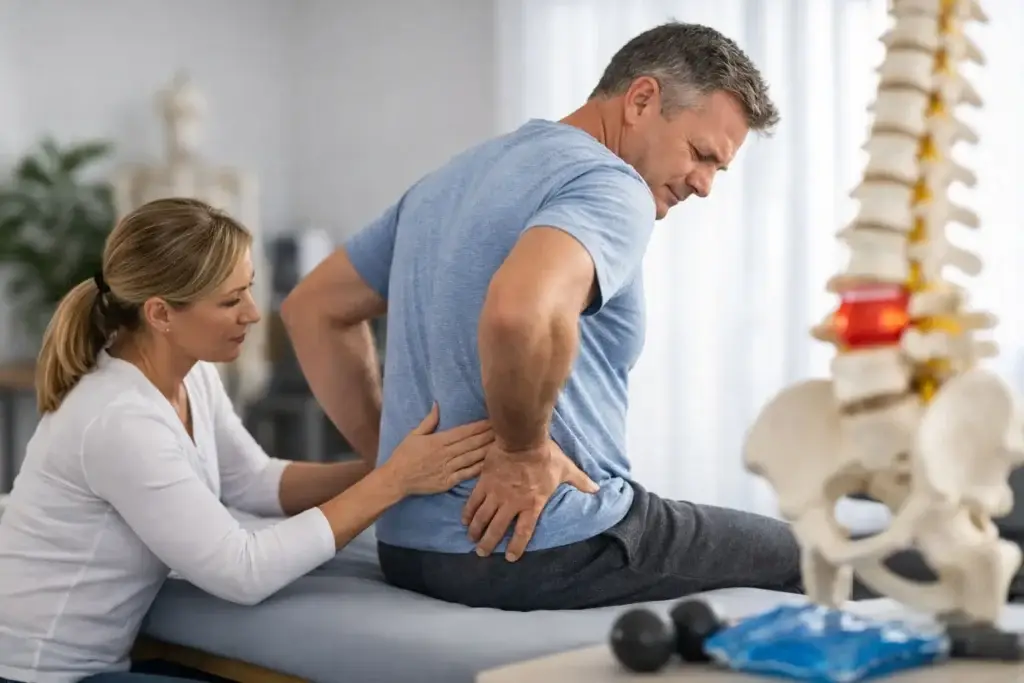
A bulging disc can make ordinary movements feel risky: getting out of the car, sitting through a work meeting, bending to tie a shoe, or sleeping through the night. Learning how to treat bulging disc pain starts with identifying what is actually driving the symptoms. The disc finding on an MRI matters, but the degree of nerve irritation, inflammation, spinal mechanics, muscle control, and functional limitation often matters just as much.
A meaningful recovery plan should do more than temporarily mask pain. It should reduce stress on the affected area, calm irritated nerve tissue, restore comfortable motion, and help you return to the activities that matter to you without constantly fearing the next flare-up.
What a bulging disc means – and why symptoms vary
Spinal discs are cushions between the vertebrae. Each disc has a tougher outer ring and a softer inner material. A bulge occurs when the disc extends beyond its normal boundary, often as a result of age-related changes, repetitive strain, prolonged loading, poor movement patterns, or an injury such as a car accident.
A bulging disc is not automatically a pain diagnosis. Some people have disc bulges with no symptoms at all. Pain becomes more likely when the disc affects nearby joints or tissues, creates inflammation, or narrows the space around a nerve root. In the lower back, that can lead to back pain, buttock pain, sciatica, numbness, tingling, or weakness in the leg. In the neck, symptoms may travel into the shoulder, arm, or hand.
The location, severity, and duration of symptoms determine the best approach. A recent flare after lifting may require a different strategy than persistent leg pain that has continued for months despite medication, rest, or basic exercises.
How to treat bulging disc pain with a targeted plan
The most effective non-surgical care is usually layered rather than reliant on one treatment. It begins with a focused evaluation that considers your symptom pattern, neurological findings, range of motion, strength, injury history, and diagnostic imaging when appropriate. This helps distinguish disc-related pain from conditions that can feel similar, including spinal stenosis, hip dysfunction, sacroiliac joint irritation, peripheral neuropathy, or muscular injuries.
Reduce aggravation without becoming inactive
During an acute flare, avoid repeatedly forcing movements that sharply increase pain or send symptoms farther down an arm or leg. This may include deep bending, twisting under load, prolonged slouched sitting, or lifting from the floor. However, complete bed rest is rarely helpful. Extended inactivity can increase stiffness, reduce conditioning, and make normal movement feel more threatening.
The better goal is controlled activity. Short walks, frequent position changes, and modified daily tasks often help maintain circulation and confidence while the irritated area settles. If sitting is a major trigger, changing positions every 20 to 30 minutes and using lumbar support may reduce strain. The exact recommendation depends on whether bending, extension, sitting, standing, or walking worsens your symptoms.
Address nerve irritation and spinal loading
When a disc bulge contributes to sciatica or radiating pain, treatment must account for the nerve, not just the painful back muscle. Manual chiropractic care may be used carefully to improve joint motion and reduce mechanical restriction when clinically appropriate. The goal is not to aggressively force the spine into a position, but to improve movement and reduce stress on irritated structures.
For selected patients, non-surgical spinal decompression may also be part of care. This treatment uses controlled traction and relaxation cycles to alter pressure within the disc and create a more favorable environment for recovery. It is not appropriate for every type of back pain or every patient, but it can be a valuable option for properly screened disc conditions, particularly when pain persists despite more basic care.
At DeSalvo Chiropractic, a Spine & Injury Center, treatment planning may integrate Accu-SPINA spinal decompression with individualized chiropractic and rehabilitation protocols when the clinical findings support that approach.
Calm pain and inflammation while restoring function
Advanced modalities can be useful when they serve a clear role in a larger plan. Class IV laser therapy may be used to support tissue healing and reduce pain and inflammation. Electrotherapy can help manage pain, improve circulation, and assist with muscle re-education. These treatments are not substitutes for correcting movement limitations, but they can make it easier to tolerate the active stages of recovery.
The right combination depends on your presentation. Someone with severe nerve sensitivity may first need treatment focused on calming symptoms before progressing into more demanding rehabilitation. Someone whose acute pain has improved but who remains weak or afraid to move may benefit most from a structured progression of stabilization and functional exercise.
Rebuild strength, control, and confidence
A disc does not exist in isolation. The muscles of the trunk, hips, legs, and upper back influence how forces move through the spine every day. Rehabilitation should be specific, gradual, and based on what you can do without provoking symptoms.
Early exercises may emphasize gentle mobility, breathing mechanics, and low-load core control. As symptoms improve, care can progress toward hip strength, trunk endurance, balance, safe lifting mechanics, and task-specific movement. A warehouse employee may need to prepare for repeated lifting. A desk-based professional may need to improve sitting tolerance and work-station habits. A runner may need a phased return to impact and training volume.
The key is dosage. Pushing too fast can trigger a flare, while doing too little can leave the spine poorly prepared for normal life. A well-designed program progresses according to your symptoms, neurological status, and functional goals.
Common mistakes that prolong bulging disc pain
Many patients arrive after trying to manage the condition alone for weeks or months. Some strategies are understandable but can slow progress. Repeatedly stretching into sharp nerve pain, for example, may aggravate an already sensitive nerve. Similarly, relying exclusively on pain medication may provide short-term relief while leaving the mechanical and functional contributors unaddressed.
Avoiding all movement can also become a problem. Fear of bending, walking, or turning may cause muscles to tighten and normal capacity to decline. Conversely, returning immediately to heavy lifting, golf, long drives, or intense gym workouts simply because pain has eased can exceed what the spine is ready to handle.
There is also no universal “best” sleeping position or exercise for every bulging disc. Some people feel better with a pillow between the knees while side sleeping; others prefer a pillow beneath the knees while on their back. The useful position is the one that reduces symptoms and allows restorative sleep.
When bulging disc pain needs urgent evaluation
Most disc-related pain can be assessed and treated conservatively, but certain symptoms require prompt medical attention. Seek urgent evaluation for new or worsening leg or arm weakness, loss of bowel or bladder control, numbness in the groin or saddle area, difficulty walking that is rapidly progressing, fever with severe back pain, or pain following major trauma.
Persistent numbness, progressive weakness, or severe radiating pain that does not respond to conservative care also deserves a more thorough evaluation. In some cases, imaging, medication management, injections, or a surgical consultation may be necessary. Non-surgical care should never delay appropriate escalation when a serious neurological issue is suspected.
What realistic recovery looks like
Recovery is rarely a straight line. Symptoms may improve steadily for several weeks, or they may fluctuate as activity increases. A useful sign is not simply whether you have a pain-free day. It is whether pain is becoming less intense, symptoms are traveling less far into the limb, movement is easier, sleep is improving, and you can do more with fewer setbacks.
A bulging disc can be a significant source of pain, but it does not have to define your mobility or your future. With a precise diagnosis, appropriate non-surgical treatment, and progressive rehabilitation, many people can reduce symptoms, regain confidence in movement, and return to work, family life, and the activities they have been putting off.