
That first step out of bed can tell you a lot. If your heel feels like it is landing on a tack, and the pain eases only after a few minutes of walking, plantar fasciitis is often the reason. For many patients, shockwave therapy for plantar fasciitis becomes a serious option when stretching, rest, inserts, and anti-inflammatory measures have not produced lasting relief.
Heel pain is common, but stubborn heel pain is a different problem. When symptoms linger for months, the issue is not always simple inflammation. In many cases, the plantar fascia has developed small areas of chronic degeneration, reduced blood flow, and tissue irritation that do not heal well on their own. That distinction matters because a treatment that only masks pain may not address why the tissue is still failing under load.
How shockwave therapy for plantar fasciitis works
Shockwave therapy uses targeted acoustic waves delivered to the injured tissue. The goal is not to numb the area. It is to stimulate a biological repair response in tissue that has become chronically irritated and slow to heal.
In plantar fasciitis, the plantar fascia – the thick band of connective tissue that supports the arch of the foot – is repeatedly stressed where it attaches near the heel. Over time, that stress can create microscopic damage. Shockwave treatment is designed to improve local circulation, encourage cellular activity involved in tissue repair, and reduce pain signaling in the affected area.
This is one reason the treatment appeals to patients who want a non-surgical option with a clearer functional goal. Rather than simply covering symptoms, it is intended to help the tissue recover enough to tolerate standing, walking, and exercise more normally.
Why plantar fasciitis becomes chronic
Plantar fasciitis is rarely just a foot problem in isolation. It often develops because of a chain of mechanical stress. Tight calf muscles, reduced ankle mobility, changes in gait, poor foot mechanics, prolonged standing, weight-bearing overload, or a return to activity too quickly can all contribute.
For some patients, the pain starts after a change in training or footwear. For others, it builds gradually during long workdays on hard surfaces. It is also common to see plantar fasciitis in people who have compensation patterns from knee, hip, or low back issues. If those factors are ignored, the heel may remain irritated no matter how many temporary treatments are tried.
That is why a more comprehensive evaluation matters. The best outcomes usually come from identifying what is continuing to overload the plantar fascia, then pairing treatment with a plan to reduce that stress.
What a treatment course typically looks like
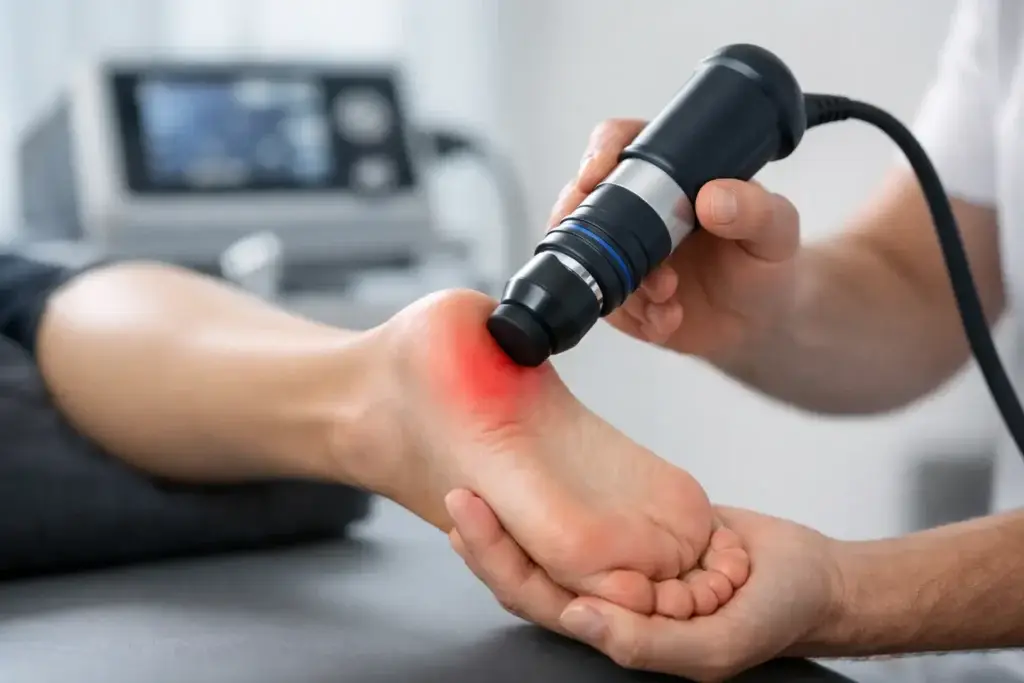
Shockwave sessions are brief and performed in the office. A handheld applicator is used to deliver energy to the painful region of the heel and the plantar fascia. Patients often describe the sensation as intense tapping or pulsing. Some areas may be more tender than others, especially where the tissue is most irritated.
A course of care usually involves multiple sessions rather than a single visit. The exact number depends on the severity and duration of symptoms, the quality of the tissue, and how long the condition has been present. Patients with newer cases may respond more quickly, while chronic cases often require a more structured treatment plan.
One important point is that relief is not always immediate. Some patients notice improvement after the first treatment, but many experience more gradual changes over several weeks as the tissue response develops. That timeline can frustrate people who are used to looking for instant pain relief, yet it is also part of why the treatment may offer more meaningful improvement when it works well.
What shockwave therapy can help with
The main goal is to reduce pain and improve function. In practical terms, that can mean less pain with the first steps in the morning, better tolerance for walking and standing, less discomfort after work, and a more comfortable return to exercise.
For patients who have already tried ice, stretching, night splints, orthotics, injections, or standard conservative care without enough progress, shockwave therapy can be a logical next step. It is especially relevant when the condition has become chronic and surgery is something the patient wants to avoid.
That said, it is not a magic fix. If someone continues the same loading pattern that caused the problem in the first place, improvement may be limited or short-lived. Shockwave tends to work best when it is part of a broader plan that addresses biomechanics, tissue irritation, and recovery capacity.
Who is a good candidate for shockwave therapy for plantar fasciitis
The best candidates are often adults with persistent heel pain that has not improved with basic self-care or previous treatment. Many have already spent months trying to manage the condition on their own. Some are active adults eager to get back to walking, tennis, hiking, or gym routines. Others are working professionals who spend much of the day on their feet and need a treatment that fits into real life.
It may be particularly useful for patients with chronic plantar fasciitis who want to avoid more invasive procedures. It can also be valuable for people who are not interested in repeated injections or who have had only temporary relief from them.
Still, proper screening matters. Heel pain is not always plantar fasciitis. A nerve issue, stress injury, fat pad irritation, or referred pain from another region can mimic it. In a more advanced setting, evaluation should confirm that the diagnosis fits the symptoms before treatment begins.
The value of combining technology with a root-cause approach
In a specialized musculoskeletal practice, shockwave therapy is rarely viewed as a stand-alone answer. It is one tool within a larger treatment strategy. That may include gait and biomechanical assessment, targeted stretching, foot and ankle rehabilitation, calf and lower extremity mobility work, and treatment for related nerve or spinal factors when they are part of the picture.
This is where experience matters. Patients with long-standing plantar fasciitis often have more than one driver behind the pain. If the fascia is treated but the movement fault remains, the tissue can become overloaded again. If the foot is painful because a nerve issue is contributing to altered mechanics, the foot alone may not be the whole story.
At DeSalvo Chiropractic, this type of condition-specific thinking is central to care. Advanced technology can be extremely effective, but the real advantage comes from applying it within an individualized plan based on clinical findings rather than a one-size-fits-all protocol.
What patients should expect after treatment
Most patients can return to normal daily activity shortly after a session, although it is often wise to avoid unusually high-impact activity right away. Some soreness can occur, especially early in the treatment course. That does not necessarily mean the therapy is aggravating the condition. It can be part of the tissue response.
Improvement is usually tracked by function as much as pain level. Are first steps easier? Can you stand longer without limping? Has your tolerance for walking improved by the end of the day? Those changes often tell more than a simple pain score.
For chronic plantar fasciitis, progress tends to be cumulative. Small gains from session to session can lead to a meaningful shift in daily comfort and mobility. When that progress is paired with correction of the underlying stressors, outcomes are generally more durable.
Trade-offs and limitations to know
Shockwave therapy is highly useful for the right patient, but it is not appropriate to present it as guaranteed. Some cases respond very well. Others improve moderately. A smaller number may not respond enough, especially when the diagnosis is incomplete or the mechanical drivers remain unchanged.
Pain tolerance during treatment varies. Cost and insurance coverage can also influence decision-making, depending on the case and plan. And while non-surgical care is often the preferred starting point, there are still situations where imaging, additional medical workup, or referral is the right next step.
The good news is that plantar fasciitis often does improve when chronic tissue irritation is treated with the right combination of technology, clinical judgment, and rehabilitation. If heel pain has been limiting your activity for months, the question is not just how to get through the day with less discomfort. It is whether the tissue is finally getting the help it needs to heal.