
Chiropractic Care · August 23, 2026
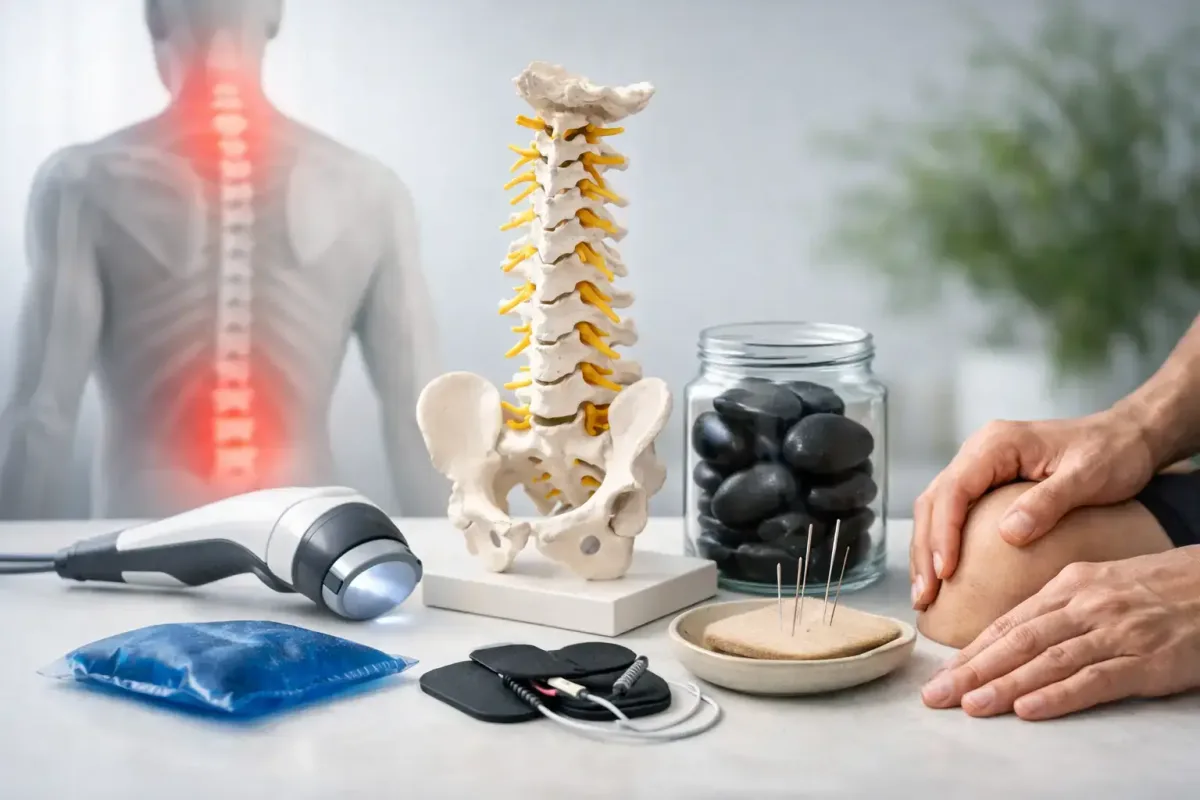
Pain that returns as soon as medication wears off, flares after a workday, or travels from the low back into the leg demands more than a temporary workaround. Effective non surgical pain relief methods begin by identifying what is driving the symptoms: a disc injury, joint dysfunction, nerve irritation, weak or guarded muscles, trauma-related tissue damage, or a combination of these factors.
For many people with persistent back pain, sciatica, neck pain, headaches, neuropathy, or injury-related limitations, surgery is not the first or only path forward. A well-designed conservative treatment plan can reduce pain, improve movement, and help restore daily function while avoiding unnecessary procedures. The right approach depends on the diagnosis, the severity of symptoms, and how the body responds over time.
Why the Cause of Pain Matters
Pain is a signal, not a complete diagnosis. Two people may both describe low back pain, yet one may have a disc bulge irritating a nerve root while the other has joint restriction, muscular compensation, or pain referred from the hip. Treating both patients the same way may produce incomplete or short-lived relief.
This is especially relevant when symptoms include numbness, tingling, burning sensations, leg weakness, pain extending below the knee, or recurring headaches after a car accident. These patterns can indicate nerve involvement or a more complex musculoskeletal problem. The goal of non-surgical care should not be to chase symptoms from visit to visit. It should be to establish a clear clinical picture, reduce mechanical stress on the affected area, and rebuild the body’s ability to move safely.
A comprehensive evaluation may include a detailed health history, orthopedic and neurological examination, movement assessment, review of imaging when available, and condition-specific testing. This process helps determine whether conservative care is appropriate and which treatments are most likely to address the underlying dysfunction.
Non Surgical Pain Relief Methods for Complex Conditions
No single therapy is ideal for every patient. A person with acute sciatica may need a different plan than someone with longstanding neuropathy, plantar fasciitis, or neck pain after a collision. The most effective programs typically combine targeted treatment with progressive rehabilitation rather than relying on one passive modality alone.
Chiropractic Care for Joint, Spine, and Nerve Function
Chiropractic care can help improve joint motion, reduce mechanical restriction, and support healthier movement patterns in the spine and extremities. For patients with back pain, neck pain, headaches, or injury-related stiffness, carefully applied chiropractic techniques may reduce stress on irritated tissues and improve mobility.
The method and intensity should be tailored to the patient. Someone with an acute disc injury, osteoporosis, severe inflammation, or significant neurological symptoms may require a gentler approach than someone with uncomplicated mechanical stiffness. Advanced chiropractic assessment may also evaluate how the nervous system is responding to pain, balance challenges, and altered movement patterns.
Non-Surgical Spinal Decompression for Disc-Related Pain
When a disc herniation, disc bulge, degenerative disc changes, or nerve root irritation is contributing to back or neck pain, non-surgical spinal decompression may be considered. This treatment uses controlled traction and relaxation cycles intended to reduce pressure within targeted spinal segments.
For appropriate candidates, decompression can be used to help relieve the mechanical load associated with disc-related pain and sciatica. It is not a universal solution, and it is not appropriate for every spinal condition. A thorough examination is necessary to determine whether a patient’s symptoms, imaging findings, medical history, and tolerance for treatment support its use.
At DeSalvo Chiropractic, treatment planning may include Accu-SPINA spinal decompression as part of a broader program for qualifying disc and nerve cases. The objective is not simply to make a painful area feel better for a few hours. It is to create an environment where irritated structures can calm down while mobility and function are rebuilt.
Laser Therapy for Pain and Tissue Recovery
Laser therapy uses specific wavelengths of light to support cellular activity in injured or painful tissue. Class IV laser therapy and cold laser therapy may be used for certain musculoskeletal and nerve-related conditions, including tendon pain, joint pain, neuropathy symptoms, soft tissue injuries, and inflammation-related discomfort.
Laser treatment is generally painless and does not require downtime. It may be particularly useful when pain limits a patient’s ability to tolerate hands-on care or exercise early in recovery. Response varies by condition, chronicity, tissue depth, and overall health, which is why laser therapy is often most valuable as one component of an individualized plan.
Shockwave Therapy for Chronic Tendon and Foot Pain
Persistent plantar fasciitis, Achilles tendon pain, certain shoulder conditions, and other chronic soft tissue problems can be difficult to resolve with rest alone. Medical shockwave therapy delivers acoustic waves to targeted tissue, with the goal of stimulating a healing response in areas that have become chronically irritated or slow to recover.
Patients often consider shockwave therapy after stretching, footwear changes, anti-inflammatory medication, or basic physical therapy have not delivered enough progress. It can be an effective option for properly diagnosed chronic tendon and fascial conditions, but treatment should be paired with movement correction and gradual loading. Without addressing the forces that caused the problem, symptoms may return.
Electrotherapy for Pain Modulation and Muscle Support
Electrotherapy can be used to help manage pain, reduce muscle guarding, encourage circulation, and support muscle activation when injury or nerve irritation has altered normal function. Systems such as HAKO-MED electrotherapy allow treatment parameters to be selected based on the patient’s diagnosis and treatment goals.
For example, an individual recovering from a motor vehicle accident may have painful muscle spasm and limited motion, while someone with peripheral neuropathy may have burning discomfort, altered sensation, and balance concerns. The treatment strategy should reflect those differences. Electrotherapy is not a replacement for diagnosis or rehabilitation, but it can help make active recovery more tolerable.
Rehabilitation Turns Relief Into Function
Pain relief matters, but long-term progress requires the body to regain confidence in movement. Once symptoms begin to settle, structured rehabilitation can address flexibility limitations, core stability, posture, gait, balance, and work or activity demands.
For a patient with sciatica, this may mean learning how to bend, sit, lift, and walk without repeatedly aggravating the nerve. For a patient with chronic neck pain and headaches, it may involve improving neck mobility, shoulder mechanics, and postural endurance. After an auto injury, rehabilitation may focus on restoring range of motion and reducing protective movement habits that can persist long after the initial trauma.
Exercise should be specific and progressive. Aggressive stretching or strengthening too early can worsen an irritable condition, while doing too little can leave the underlying weakness and movement dysfunction unchanged. A clinician-guided plan helps establish the right pace.
When Conservative Care Needs Urgent Medical Attention
Non-surgical treatment is valuable, but not every pain condition should be managed conservatively without further medical evaluation. New or worsening weakness, loss of bowel or bladder control, numbness in the groin area, severe unrelenting pain, unexplained fever, significant trauma, or sudden neurological changes require prompt medical assessment.
Likewise, persistent pain that does not respond as expected deserves a reassessment. Imaging, specialist consultation, medication management, injections, or surgical evaluation may be appropriate in some cases. High-quality conservative care includes knowing when a patient needs a different level of care.
Choosing a Plan That Fits Your Condition
The best non-surgical pain program is not defined by the number of technologies used. It is defined by whether each treatment has a clinical purpose. A patient should understand what is being treated, why a specific therapy is recommended, what improvement should look like, and how progress will be measured.
For Bay Area patients who have already tried generic care without lasting results, a more precise evaluation can change the conversation. Persistent pain is often not a sign that recovery is impossible. It may be a sign that the true source of the problem has not yet been fully addressed.
Relief becomes more meaningful when it helps you return to the things pain has interrupted: sleeping comfortably, working without constant distraction, walking with confidence, exercising, traveling, and participating in life without planning every movement around discomfort.