
Disc Injury · August 21, 2026
A disc bulge can make ordinary movements feel calculated: getting out of the car, leaning over a sink, sitting through a meeting, or taking a walk without pain shooting into the leg. The top options for disc bulge recovery are not one-size-fits-all treatments. The right plan depends on the disc involved, whether a nerve is irritated or compressed, the duration of symptoms, and how much the condition is limiting work, sleep, and mobility.
Many disc bulges improve without surgery. But “waiting it out” is not always an effective strategy, especially when pain persists, sciatica develops, or repeated flare-ups keep disrupting life. A focused evaluation and an individualized plan can help protect function while addressing the mechanical and nerve-related factors that keep symptoms active.
First, Know What a Disc Bulge Means
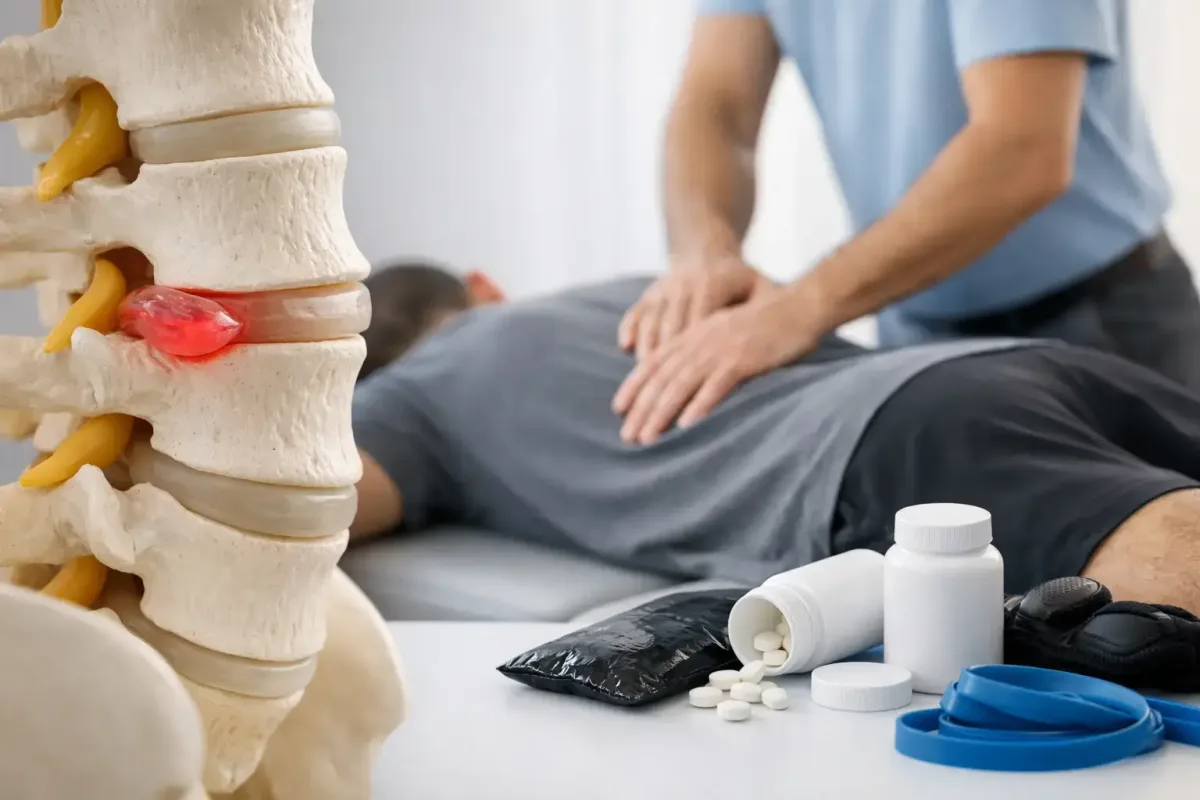
Spinal discs act as cushions between the bones of the spine. A disc bulge occurs when the disc extends beyond its normal boundary. It is different from a disc herniation, in which material from the inner portion of the disc pushes through an outer tear, although the two conditions can produce similar symptoms.
A bulge on an MRI does not automatically explain pain. Some people have disc bulges without symptoms, while another person may have a smaller bulge that irritates a nearby nerve and causes severe low back pain, numbness, tingling, weakness, or sciatica. That is why recovery should begin with a clinical examination, not an imaging report alone.
A thorough assessment considers posture, range of motion, strength, reflexes, sensation, walking tolerance, and the pattern of symptoms. For people hurt in a car accident or those with a history of recurring back pain, the evaluation may also need to account for soft-tissue injury, joint dysfunction, and nerve sensitivity that can complicate recovery.
Top Options for Disc Bulge Recovery
Activity Modification Without Complete Rest
During an acute flare, temporary changes in activity can reduce irritation. This may mean avoiding repeated bending, twisting, heavy lifting, prolonged sitting, or the specific movements that trigger leg pain. It does not usually mean staying in bed for days.
Too much rest can lead to stiffness, deconditioning, and greater fear of movement. The goal is controlled activity: short walks as tolerated, frequent position changes, and a gradual return to normal movement. A clinician can help determine which motions should be limited initially and which movements are safe to restore.
Structured Rehabilitation and Core Stability
Rehabilitation is one of the most valuable non-surgical options because it addresses what happens after the initial pain settles. A disc bulge may heal or become less symptomatic, but poor movement patterns, weak trunk support, reduced hip mobility, and a sedentary routine can set the stage for repeated episodes.
An appropriate rehabilitation program is not simply a generic sheet of stretches. It should progress based on symptoms and function. Early care may emphasize gentle directional movements, walking tolerance, and restoring comfortable motion. As symptoms improve, treatment can advance to core stabilization, hip strength, balance, lifting mechanics, and work-specific or sport-specific conditioning.
Some patients feel worse with certain stretches, particularly aggressive hamstring stretching or deep spinal flexion when a nerve is highly irritated. The correct exercise selection depends on the individual presentation. Pain that travels farther down the leg during an exercise is generally a signal to stop and reassess.
Chiropractic Care for Mechanical Dysfunction
When appropriate, chiropractic care can be part of a conservative recovery plan for disc-related back pain. The purpose is not to force a disc back into place. Rather, carefully selected treatment may help improve spinal motion, reduce protective muscle guarding, and address mechanical dysfunction around the affected area.
The technique and intensity should match the patient’s condition. A person with acute sciatica, significant nerve irritation, osteoporosis, recent trauma, or a complex medical history requires a different approach than someone with mild, localized stiffness. A clinically sophisticated provider will evaluate contraindications, monitor neurological symptoms, and adjust care as the patient responds.
Non-Surgical Spinal Decompression
For certain patients with persistent disc-related pain, non-surgical spinal decompression may be considered as part of a broader treatment plan. This approach uses computerized traction to apply controlled unloading and relaxation to the spine. The goal is to reduce pressure on affected structures, improve mobility, and support a more comfortable healing environment.
Decompression is not appropriate for every type of back pain, and it is not a substitute for a proper diagnosis. Its value is greatest when the clinical findings, symptom pattern, and imaging, when available, support a disc or nerve-related source of pain. It is often paired with targeted rehabilitation rather than used as a stand-alone service.
At DeSalvo Chiropractic, advanced Accu-SPINA spinal decompression can be incorporated into customized programs for qualified patients with disc conditions, sciatica, and persistent back pain. Treatment planning should always be based on the patient’s neurological status, function, history, and response to care.
Laser Therapy and Electrotherapy for Pain Control
Pain relief matters because severe pain can prevent a person from sleeping, walking, or participating in rehabilitation. Modalities such as Class IV laser therapy, cold laser therapy, and electrotherapy may be used to help manage pain, muscle spasm, and tissue sensitivity while the underlying movement and disc-related issues are addressed.
These treatments are supportive tools, not shortcuts. Their practical benefit is often that they make it easier for a patient to move, tolerate therapeutic exercise, and progress through a rehabilitation plan. The best results generally come from combining symptom relief with strategies that improve function and reduce repeat strain.
Medication or Medical Pain Management
Depending on the severity of symptoms and a patient’s health history, a primary care physician or specialist may recommend anti-inflammatory medication, other pain-relieving medication, or a short-term muscle relaxant. These options can be useful during a painful flare, but they come with trade-offs, including potential side effects and the risk of relying on medication without correcting the factors that perpetuate the problem.
For some people, epidural steroid injections may be discussed when radicular pain from nerve inflammation is severe or is not improving with conservative care. Injections can reduce inflammation and provide a window for rehabilitation, but the response varies. They do not repair the disc itself, and they are not necessary for every patient.
Surgical Consultation When Symptoms Demand It
Surgery is not the first step for most disc bulges, but it can be appropriate when there is progressive neurological weakness, severe persistent pain that has not responded to well-directed conservative care, or a clear structural problem causing substantial nerve compression. A surgical consultation provides another level of information when recovery has stalled.
Certain symptoms require urgent medical evaluation rather than continued conservative treatment. These include new bowel or bladder control problems, numbness in the groin or saddle area, rapidly worsening leg weakness, fever with severe back pain, or back pain following significant trauma. These signs can indicate a serious condition requiring immediate care.
What a Strong Recovery Plan Looks Like
The most effective disc bulge recovery plans are phased. The first phase focuses on calming pain and protecting irritated nerves. The next restores movement and tolerance for daily activity. The final phase builds the strength, coordination, and confidence needed to return to work, exercise, travel, and family life without treating the spine as fragile.
Progress is rarely perfectly linear. A long drive, an awkward lift, or a demanding workweek can cause temporary symptoms even when overall recovery is moving forward. What matters is whether pain is becoming less intense, less frequent, less likely to travel into the leg, and easier to manage with normal movement.
The goal is not just to get through the next flare-up. It is to understand why the flare-up occurred, improve how the spine and nervous system tolerate load, and return to a level of function that feels dependable. With a precise diagnosis, appropriate non-surgical care, and a plan that progresses beyond temporary pain relief, many people can move forward with far less fear and far more confidence.